
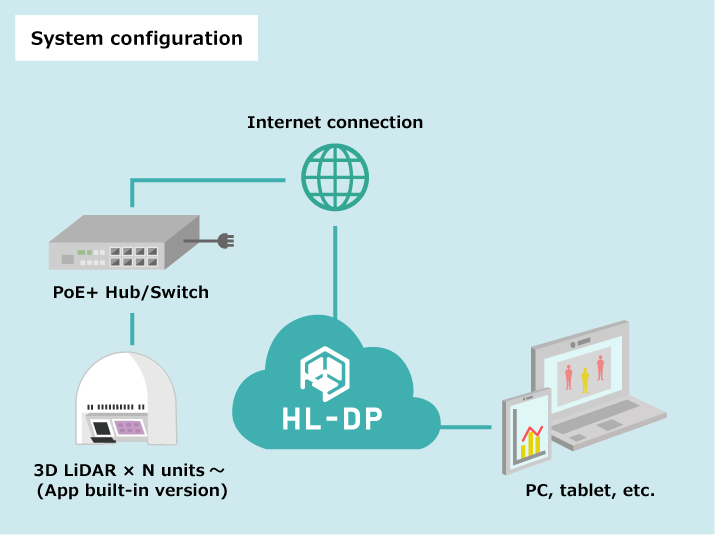
Sensors are installed in the stores to visualize the data such as the number of customers visiting the store and their in-store behavior. By measuring customer movement and time spent in front of shelves, it is possible to optimize inventory management and order management, and to identify problems with items that are not selling well.
Do you understand the effectiveness of your sales promotion activities?
I am having trouble understanding how to measure the effectiveness of advertising promotion activities.
We promote store DX by verifying sales promotion activities using not only sales data
but also a variety of other data.
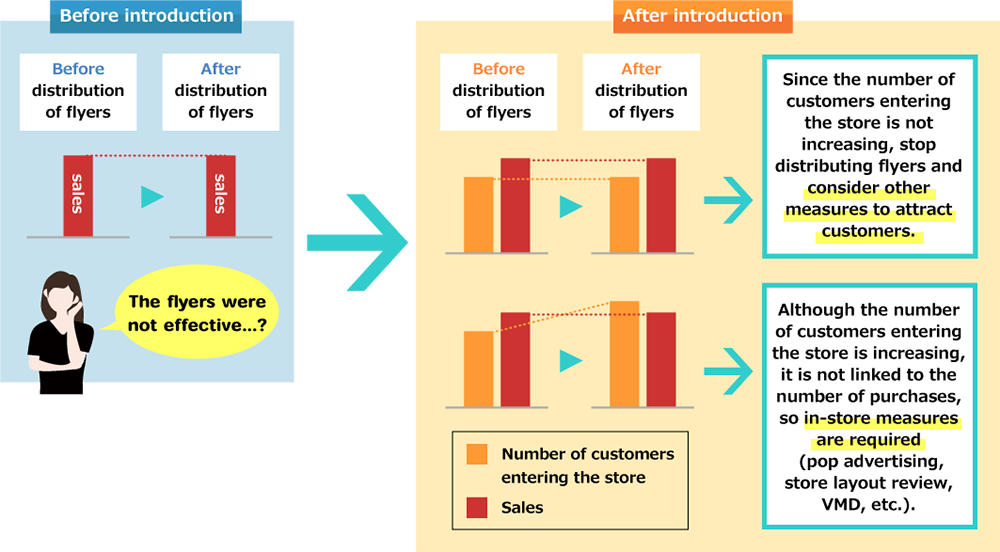

Sensors are installed at store entrances to accurately measure the number of store visitors. By linking this data with various data such as sales data of the day, advertising expenses, and sale periods, the cost effectiveness of implemented sales promotion activities can be measured, enabling optimization of sales promotion activities.
Do you understand the customer’s behavior before deciding to purchase an item?
Since the in-store behavior of customers is not understood, only “guess-base” sales promotion measures can be taken.
Sensors are installed in the store to measure the dwell time spent in front of the shelves,
supporting the marketing data collection never experienced before.
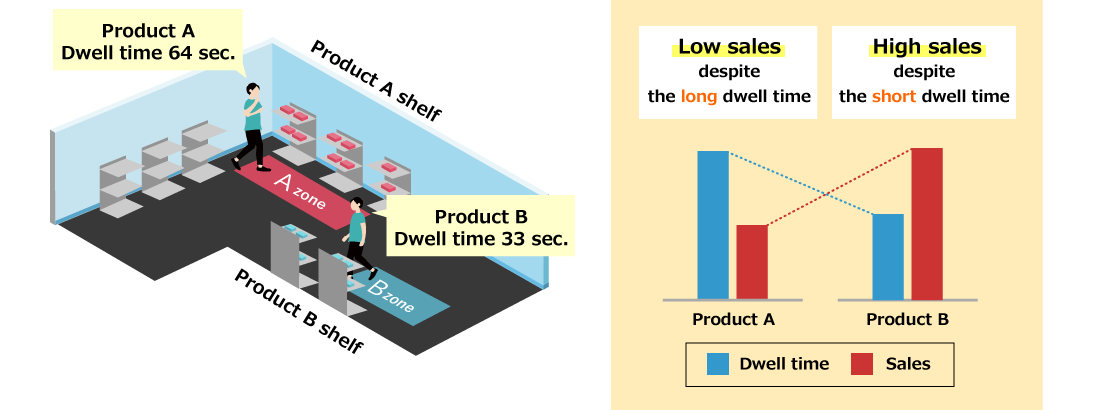
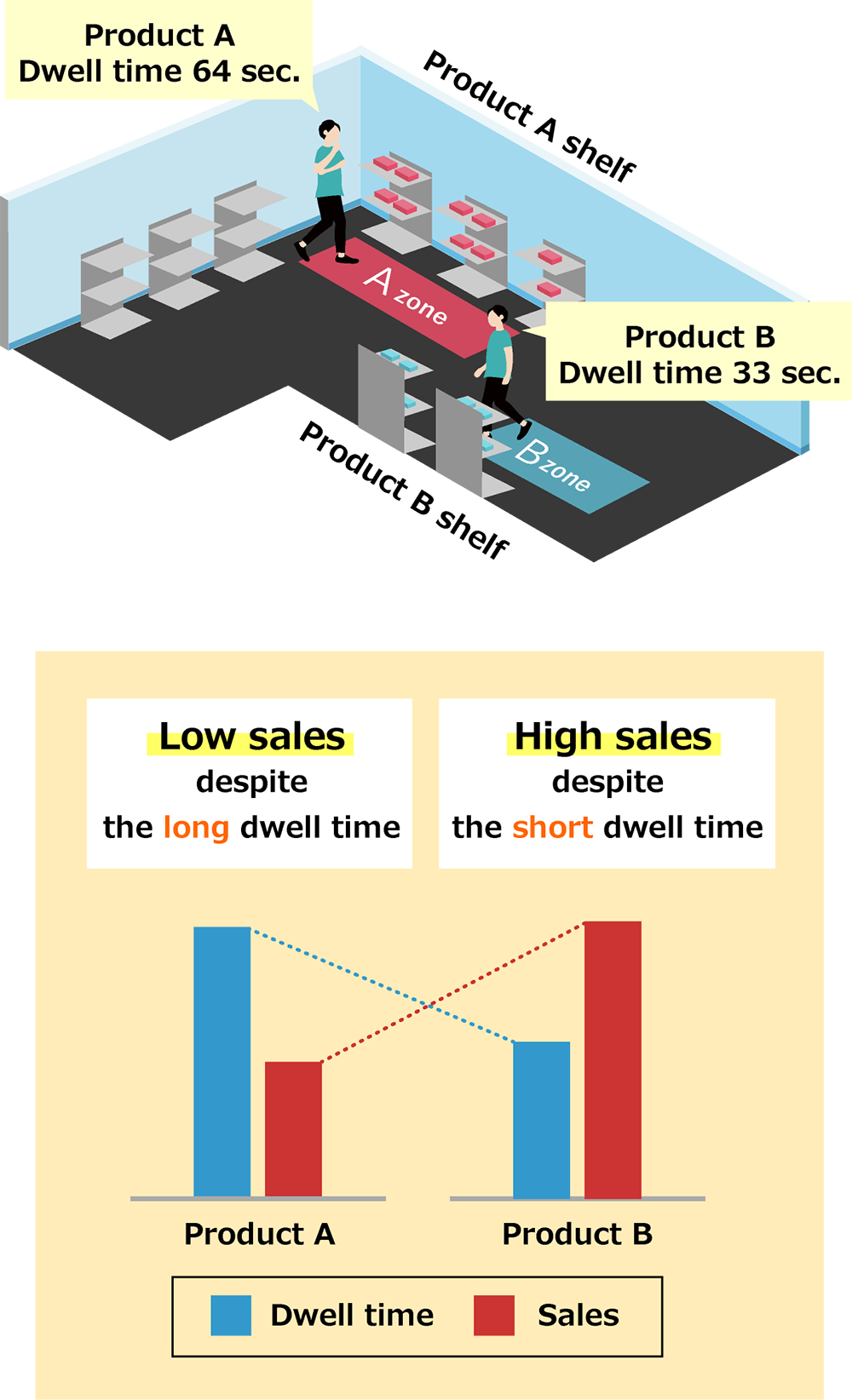
By combining this with POS data, it enables to identify the items of high interest but low sales, which is not possible with sales data alone.
Expected benefits
Advertising the effectiveness can be verified
The number of visitors to a store can be measured, allowing comparison of sales data with the number of visitors after advertising.
New Marketing Perspectives
Understanding customer behavior in front of the shelf enables unprecedented marketing data collection.